Top 5 Permits Every Trucking Company Needs in 2026
· Trucking Compliance Service
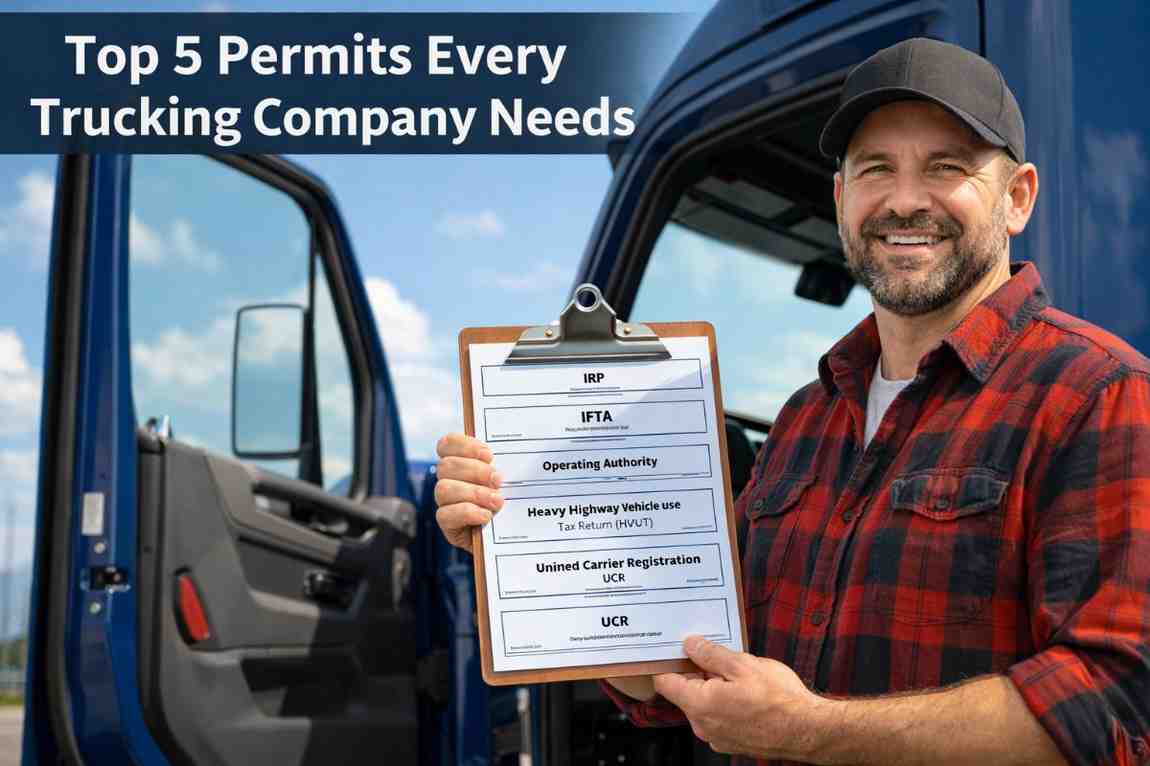
The freedom of the open road is the reason most drivers get into the freight industry. But behind every successful fleet is a mountain of state and federal paperwork. Crossing state lines without the proper documentation will quickly turn a profitable trip into a financial nightmare at the weigh station.
If you are currently researching how to start a trucking company in the USA, or if you are expanding your existing fleet, knowing exactly which credentials you must carry is critical.
To keep your trucks moving and avoid catastrophic fines, here is a complete breakdown of the top 5 permits every trucking company needs to operate legally and profitably in 2026.
1. Unified Carrier Registration (UCR)
The UCR is often the very first registration step after you get your DOT and MC numbers active. It is a federally mandated, state-administered program that collects fees from motor carriers, freight forwarders, and brokers.
- Who needs it? Any individual or company operating commercial motor vehicles in interstate or international commerce.
- How it works: You pay an annual fee based directly on the size of your fleet. Failing to register your UCR is one of the easiest ways to get cited and detained during a roadside inspection.
2. International Registration Plan (IRP)
If your trucks haul freight across state lines, you need apportioned plates. The IRP is a cooperative agreement among US states and Canadian provinces that allows your commercial vehicles to travel freely between jurisdictions.
- Who needs it? Trucks with two or more axles exceeding 26,000 lbs, or vehicles pulling trailers where the combined weight exceeds 26,000 lbs.
- The Catch: Before a state DMV will issue your IRP apportioned plates, you must prove that you have paid your federal highway taxes. This means you must have a stamped Form 2290 Schedule 1 on hand before applying for the IRP.
3. International Fuel Tax Agreement (IFTA)
Buying temporary fuel permits at every state border is expensive and time-consuming. The IFTA license and accompanying truck decals simplify fuel tax reporting for interstate carriers.
- How it works: You track your fuel purchases and miles driven in each state, and file one consolidated tax return at the end of every quarter.
- The Risk: Tax agencies are ruthless. If you miss an IFTA filing, you will be hit with immediate late fees, interest, and potentially the revocation of your operating license.
4. State-Specific Weight Distance Permits (KYU, NY HUT, NM, OR)
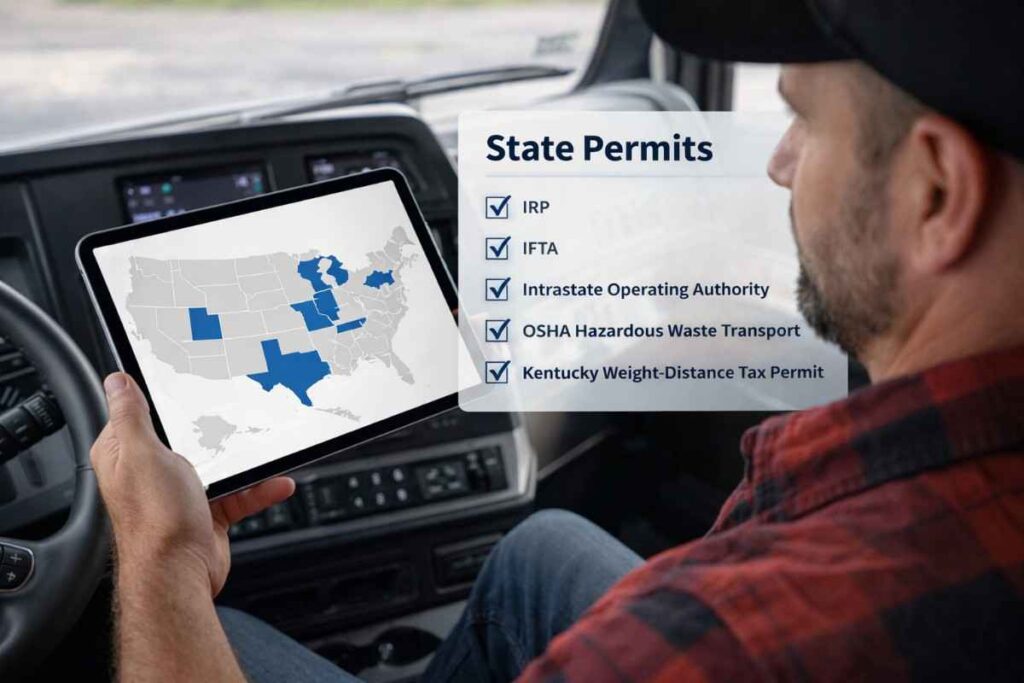
Many new owner-operators mistakenly believe that IFTA covers all state taxes. It does not. Several states impose their own specific Weight Distance Taxes that must be paid in addition to your IFTA fuel taxes.
If you route your trucks through these states, you must acquire their standalone permits:
- New York (NY HUT): Highway Use Tax for vehicles over 18,000 lbs.
- Kentucky (KYU): Required for trucks with a gross weight of 60,000 lbs or more.
- New Mexico (WDT): Weight Distance Tax for vehicles over 26,000 lbs.
- Oregon: Oregon requires a specific highway use permit and bond.
Getting caught without these state-specific permits will result in your truck being impounded until massive release fees are paid.
5. Oversize / Overweight (OS/OW) Permits
Not all freight fits neatly into a standard dry van. If you haul heavy equipment, construction materials, or specialized loads that exceed standard legal dimensions, you need OS/OW permits.
- The Challenge: Every single state has different routing rules, escort requirements, and bridge weight limits.
- The Solution: These temporary trip permits must be ordered and approved rapidly before your driver reaches the state line to prevent costly downtime.
Why Full DOT Compliance is Your Ultimate Defense
Having the right permits in your cab is only half the battle. You must also maintain perfect logs, pass safety audits, and keep your drivers’ records clean.
Missing permits, expired medical cards, and logbook errors consistently rank among the 10 most common DOT violations. A single severe violation can trigger an Out-of-Service order, ruining your CSA score and driving up your insurance premiums.
Secure Your Fleet with Trucking Compliance Services
You do not have to manage this mountain of paperwork alone. At Trucking Compliance Service, we act as your dedicated safety department.
We handle everything from IRP and IFTA setups to quarterly tax filings and securing temporary state permits. Furthermore, we offer comprehensive CDL Protection plans to defend your drivers against moving violations and keep your business safe from aggressive DOT fines.

Need help getting your trucking permits?
Contact our compliance experts today to get your trucks legally permitted and ready for the road.
Call: 916-866-2838
Website: truckingcomplianceservice.com
Frequently Asked Questions (FAQs)
1. Do I need IFTA and IRP if I only drive within one state?
No. If your commercial truck operates exclusively within the borders of a single state (intrastate commerce), you do not need an IFTA license or IRP apportioned plates. You only need your standard state commercial registration and local DOT authority.
2. How often do I have to renew my UCR registration?
The Unified Carrier Registration (UCR) must be renewed annually. The registration period typically opens in the fall (around October) for the upcoming year, and enforcement for the new year officially begins on January 1st.
3. What happens if I drive through New York without a NY HUT permit?
If you are caught operating a qualifying commercial vehicle in New York without a valid Highway Use Tax (HUT) permit and decal, law enforcement can issue severe fines, seize the vehicle, and legally prevent you from operating within the state until all back taxes, penalties, and permit fees are paid in full.
Need help? Call 888-700-5704 or contact us.