Form 2290 Heavy Vehicle Use Tax (HVUT): Complete Guide for Trucking Companies
· Trucking Compliance Service
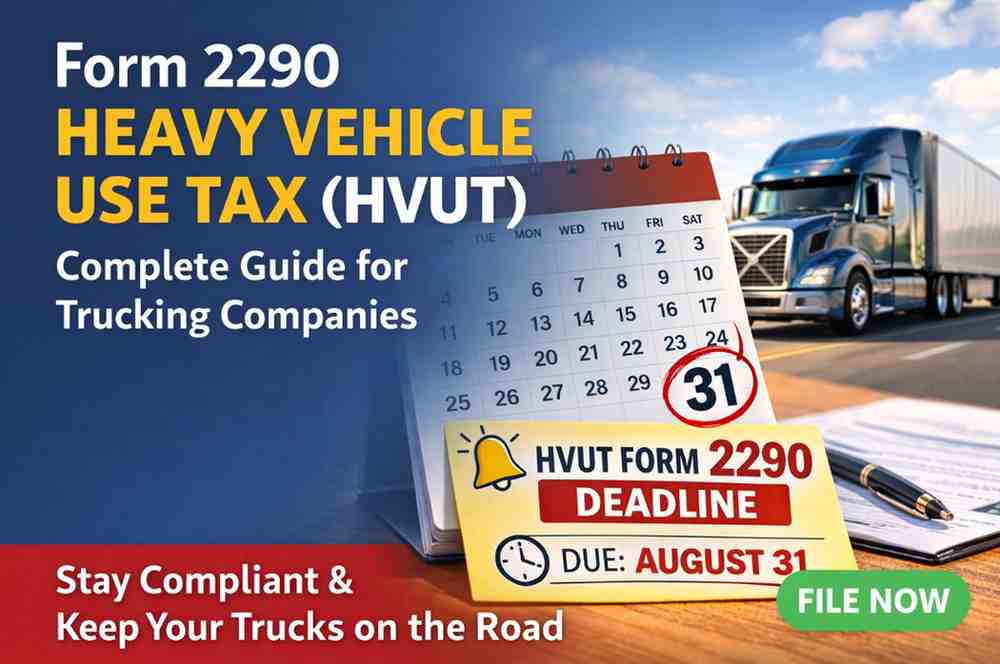
Managing paperwork and taxes is a massive part of running a compliant trucking business. Among all the federal requirements, understanding IRS Form 2290 trucking regulations is absolutely essential for keeping your fleet on the road.
In this comprehensive guide, we will cover everything you need to know about the Heavy Vehicle Use Tax, deadlines, pricing, and how to get your proof of payment fast.
What is Form 2290 (Heavy Vehicle Use Tax)?
Form 2290 is a mandatory federal tax required by the IRS for heavy vehicles operating on U.S. highways. Often referred to simply as the HUT tax trucking fee, it is designed to fund highway construction and maintenance.
Here are the key points you need to remember about the Heavy Vehicle Use Tax (HVUT):
- It directly applies to trucks weighing 55,000 pounds or more.
- It must be paid once per year.
- It is legally required to keep your truck legally operating on public roads.
Who Must File Form 2290?
Whether you have a single truck or a massive fleet, the IRS is very clear on who is responsible for this tax.
The following groups must file:
- Owner operators (Understanding the 2290 tax for owner operators is critical for independent drivers).
- Trucking companies managing multiple commercial vehicles.
- Fleet owners running interstate commerce.
- Businesses operating heavy highway vehicles (e.g., logging or agricultural trucks).
Simply put: Anyone operating trucks with a Gross Vehicle Weight (GVW) of 55,000 lbs or more must file this form annually.
When is Form 2290 Due?
Missing the IRS deadline can result in heavy penalties and interest. The HVUT calendar is slightly different from standard income taxes.
Here is the deadline clearly explained:
- The official tax year runs from July 1 – June 30.
- The standard filing deadline is August 31 each year.
However, there is an exception. If you place a new or used truck into service later in the year, you must file by the end of the following month.
Example of late-year filing: If your truck starts operating in October → your Form 2290 is due on November 30.

How Much is the 2290 Tax?
The cost of your Form 2290 filing is directly tied to the gross taxable weight of your vehicle.
Here is how the pricing structure works:
- The maximum tax per truck is $550 per year.
- The exact amount depends entirely on your vehicle’s specific weight category.
Weight Calculation Examples:
- A truck weighing exactly 55,000 lbs → pays a lower tax rate (starting at $100).
- A truck weighing 75,000 lbs or more → pays the maximum $550 fee.
(To see how to process this payment securely, check out our guide on submitting your instant e-file here).
What is a Stamped Schedule 1?
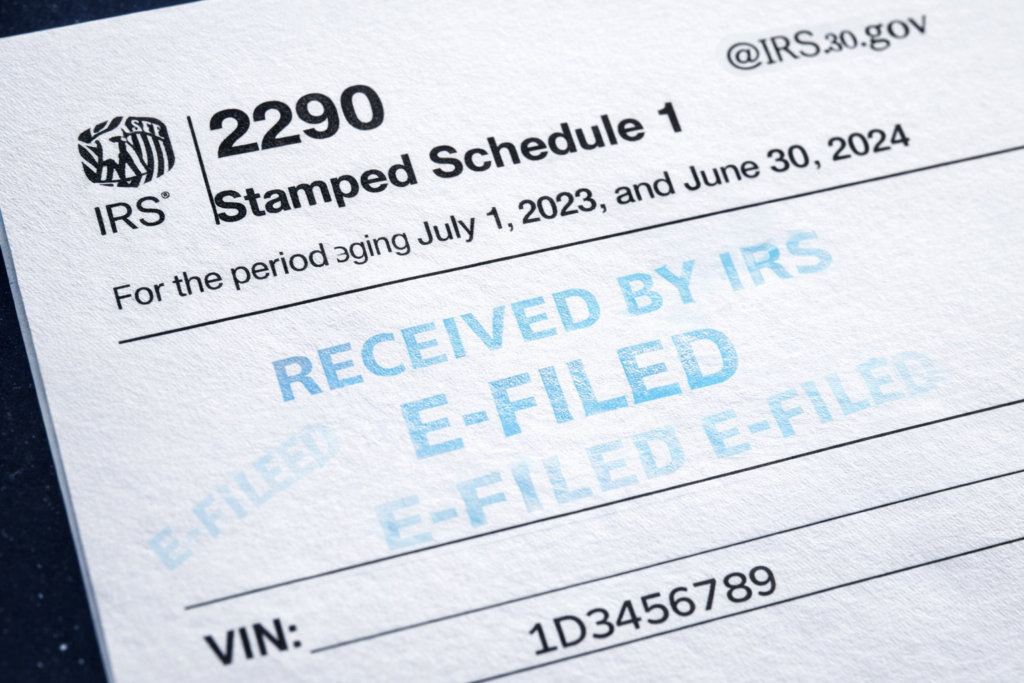
After successfully filing Form 2290, the IRS provides a highly important document called the 2290 stamped Schedule 1. Just as you need a CARB compliance certificate in California, this Schedule 1 is your nationwide proof of tax payment.
This specific document is legally required for:
- IRP plate renewal
- Truck registration
- DMV verification at the state level
Without a valid stamped Schedule 1, you simply cannot renew your plates or register your truck.
How to File Form 2290
With the shift towards digital compliance, 2290 filing for truckers has become much more streamlined. If you are wondering how to file form 2290 online, simply follow these exact steps:
- Gather truck information: You will need your exact Vehicle Identification Number (VIN) and gross taxable weight.
- Calculate HVUT tax: Determine your tax bracket based on the vehicle’s weight.
- File Form 2290 electronically: Use an IRS-approved e-file provider.
- Pay IRS tax: Submit your payment via direct debit (ACH) or credit card.
- Receive stamped Schedule 1: Get your watermarked proof of payment within minutes via email.
Common Mistakes Trucking Companies Make
Filing errors can delay your registration and keep your trucks parked. Avoid these common mistakes when submitting your HVUT:
- Filing after the deadline: This triggers immediate IRS late fees and monthly interest.
- Incorrect VIN number: A single typo in your VIN means your Schedule 1 will be rejected by the DMV.
- Wrong weight category: Underpaying your tax bracket can trigger an IRS audit.
- Losing Schedule 1 copy: Misplacing this document delays your IRP renewals.
How Trucking Compliance Services Can Help
Handling IRS paperwork takes you away from the road. Trucking Compliance Services is dedicated to making this process completely stress-free.
Our team helps trucking companies with:
- Form 2290 filing
- Securing your Stamped Schedule 1
- VIN corrections for previously rejected forms
- Multiple truck filings for large fleets
- Fast IRS processing to get you back on the road instantly
Need help filing your Form 2290 Heavy Vehicle Use Tax?
Our team helps trucking companies file quickly and receive their stamped Schedule 1 without delays.
Call: 916-866-2838
Website: truckingcomplianceservice.com
Frequently Asked Questions (FAQs)
1. What happens if I lose my 2290 stamped Schedule 1?
If you lose your stamped Schedule 1, you can retrieve a copy by logging back into your authorized e-file provider’s portal, or by requesting a replacement directly from the IRS. However, using a reliable compliance service ensures you always have digital backups ready when you need them.
2. Can I file Form 2290 if my truck drives less than 5,000 miles a year?
Yes, but your truck may be considered “suspended.” Vehicles driven fewer than 5,000 miles annually (or 7,500 miles for agricultural vehicles) are exempt from paying the tax, but you are still legally required to file Form 2290 and claim the suspension to receive your Schedule.
3. Why do I need to e-file my Form 2290?
The IRS strongly encourages e-filing. In fact, if you are reporting 25 or more heavy highway vehicles, the IRS legally requires you to file electronically. E-filing is the fastest way to ensure accuracy and receive your stamped Schedule 1 within minutes.
Need help? Call 888-700-5704 or contact us.