What Does CSA Stand For in Trucking?
· Trucking Compliance Services
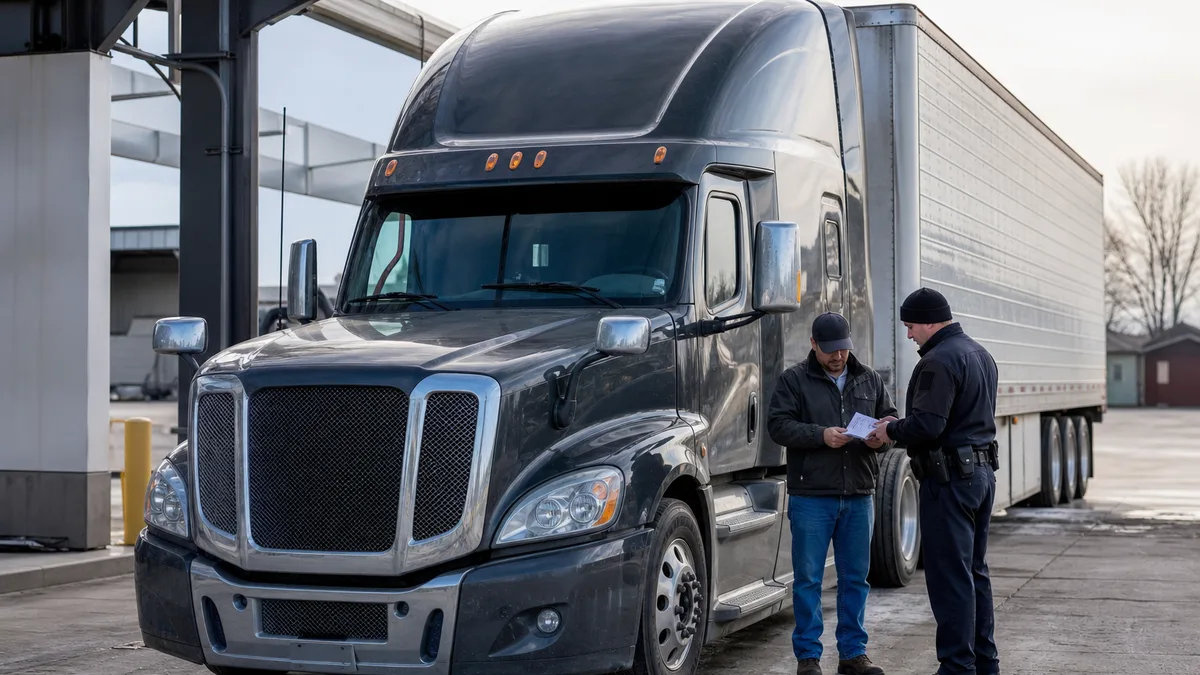
Prefer to watch? The 1-minute version
Video transcript
Ever wonder why some loads just disappear? Your CSA score might be the reason. CSA stands for Compliance, Safety, Accountability — FMCSA's program for scoring carriers using inspection and crash data. FMCSA sorts violations into seven BASIC categories, like unsafe driving, hours-of-service, and vehicle maintenance. Most scores are public on FMCSA's SMS website, so brokers, shippers, and insurers can check them anytime. High scores can trigger warning letters, targeted inspections, or a full compliance review. You can check your own scores for free using your USDOT number on FMCSA's SMS site. If a violation looks wrong, you can challenge it through FMCSA's DataQs system to help improve your score. Need help with this? Trucking Compliance Services can handle it for you. Call 888-700-5704, or get your free DOT compliance check at truckingcomplianceservice.com.
What Does CSA Stand For in Trucking?
CSA stands for Compliance, Safety, Accountability. It is a safety program run by the Federal Motor Carrier Safety Administration (FMCSA), the federal agency that regulates trucking companies and commercial drivers in the United States. The CSA program uses data from roadside inspections, crashes, and violations to track how safely a trucking company operates.
If you drive a truck or run a small fleet, you have probably heard the word "CSA" a hundred times — "watch your CSA score," "that violation will hurt your CSA," and so on. This guide explains exactly what the letters mean, how the program works, and why it matters to your authority, your insurance, and your paycheck.
What Is the CSA Program, Exactly?
The CSA program is FMCSA's system for finding unsafe trucking companies and drivers before they cause a crash. It does this by collecting inspection and crash data, grouping violations into categories, and scoring each carrier so FMCSA can decide who needs a visit, a warning, or an audit.
FMCSA launched CSA in December 2010 to replace an older system called SafeStat. The idea was simple: use real roadside data, not just crash history, to spot risky carriers early. According to FMCSA, the program is meant to improve safety by giving the agency more frequent and more detailed information on carrier performance than crash reports alone ever could.
What Does the "C," "S," and "A" Each Mean?
Each letter in CSA describes one part of how the program works, from gathering information to taking action on it.
- Compliance – FMCSA collects data from roadside inspections and crashes to see if carriers and drivers are following federal safety rules (things like hours of service, vehicle maintenance, and driver qualifications).
- Safety – That data is turned into safety performance scores, grouped into seven categories called BASICs (Behavior Analysis Safety Improvement Categories).
- Accountability – FMCSA uses the scores to decide which carriers get warning letters, investigations, or interventions, holding unsafe carriers accountable before a serious crash happens.
What Are the 7 BASIC Categories Under CSA?
BASICs are the seven groups FMCSA uses to sort safety violations into related buckets, so a carrier's score reflects specific risk areas, not just a single overall number. Each BASIC tracks a different type of safety problem.
| BASIC Category | What It Measures |
|---|---|
| Unsafe Driving | Speeding, reckless driving, improper lane change |
| Hours-of-Service (HOS) Compliance | Driver fatigue, logbook violations |
| Driver Fitness | Invalid CDL, missing medical card, lack of training |
| Controlled Substances/Alcohol | Drug and alcohol violations |
| Vehicle Maintenance | Brakes, tires, lights, and other equipment defects |
| Hazardous Materials Compliance | Unsafe handling or transport of hazmat |
| Crash Indicator | History of crashes on the carrier's record |
A carrier's percentile score in each BASIC is based on violation data from roadside inspections over the past 24 months, weighted so more recent and more severe violations count more.
Who Can See a Carrier's CSA Scores?
Most CSA scores and violation details are public on FMCSA's SMS (Safety Measurement System) website, so shippers, brokers, and insurance companies can look them up before doing business with a carrier. Some scores are only visible to the carrier and FMCSA, not the public.
This matters for your bottom line. Brokers and shippers often check CSA scores before assigning loads, and insurance companies use them when pricing a policy. A rising score in any BASIC can mean fewer load offers and higher premiums, even if you have never been in a crash.
How Does the CSA Program Affect Your Company?
The CSA program affects your company by flagging you for FMCSA intervention if your scores get too high in certain BASICs. Interventions can include a warning letter, a targeted roadside check, or a full DOT compliance review (audit).
Here is the general order FMCSA follows when a carrier's scores raise concern:
- Monitoring – FMCSA watches the carrier's data over time.
- Warning letter – Sent when a BASIC score crosses a threshold.
- Targeted roadside inspections – More frequent stops to gather fresh data.
- Off-site or on-site investigation – A deeper review of records, logs, and maintenance files.
- Enforcement action – This can include fines, a downgraded safety rating, or in serious cases, an order to stop operating.
How Can You Check Your Own CSA Score?
You can check your CSA scores for free on FMCSA's Safety Measurement System (SMS) website using your USDOT number. Log in, find your seven BASIC percentiles, and review any open violations listed from the last 24 months.
If a violation on your record looks wrong — written up incorrectly by an officer, or listed against the wrong vehicle — you can challenge it through FMCSA's DataQs system (dataqs.fmcsa.dot.gov). Fixing bad data is one of the few ways to directly improve a CSA score.
How TCS Can Help You Stay Ahead of CSA Problems
Understanding what CSA stands for is the easy part. Keeping your scores low, your driver files clean, and your trucks inspection-ready is the ongoing work — and it's easy for a busy owner-operator or small fleet to fall behind. TCS helps carriers across the country review their safety data, fix driver qualification file gaps, and get ready for FMCSA audits before a small issue becomes a big one.
Not sure where your company stands right now? Run a free DOT compliance check at https://app.truckingcomplianceservice.com/check, or call TCS at 888-700-5704. You can also reach our team anytime through our contact page.
This article is for general information only and is not legal or tax advice.
Last updated: November 16, 2026
Frequently asked questions
What does CSA stand for in trucking?
CSA stands for Compliance, Safety, Accountability. It is FMCSA's program for scoring trucking companies and drivers based on inspection and crash data.
Is CSA the same as CSA score?
No. CSA is the overall FMCSA program; a CSA score (or BASIC percentile) is one of the specific safety measurements produced by that program.
When did the CSA program start?
FMCSA launched the CSA program in December 2010 to replace the older SafeStat system.
Can shippers and brokers see my CSA score?
Yes, most CSA data is public through FMCSA's Safety Measurement System (SMS), which shippers, brokers, and insurers often check before working with a carrier.
How do I check my CSA score?
Log in to FMCSA's Safety Measurement System (SMS) with your USDOT number to view your seven BASIC category scores and recent violations.
Sources
Need help? Call 888-700-5704 or contact us.