Plan a Profitable Week: The 2026 Trip-Planning Playbook for Owner-Operators
· Trucking Compliance Service
The difference between a $6,000 week and a $3,500 week is rarely luck. It is planning. In a 2026 freight market where available capacity, not demand, is driving rates, the owner-operators who map their week ahead of time are the ones protecting their rate per mile. According to DAT Freight & Analytics, spot van linehaul rates averaged $2.39 a mile in July 2026 (about $3.01 with fuel), while reefer ran $2.75 and flatbed $2.90 linehaul. Van spot and contract rates even hit parity, a sign of tightening capacity. Good rates are out there. This playbook shows you how to plan a week that actually captures them.
Start With Your Cost Per Mile, Not the Load Board
You cannot plan a profitable week if you do not know what a profitable mile looks like for your truck. Add up your fixed costs (truck payment, insurance, permits, ELD) and your variable costs (fuel, maintenance, tires, tolls) and divide by your realistic monthly miles. Most single-truck operators land somewhere between $1.80 and $2.20 all-in per mile. That number is your floor. Every load you consider this week gets measured against it before anything else. When diesel moves, your floor moves too, so recheck it monthly.
Plan Your Week Around Anchor Loads and Strong Lanes
Instead of booking one load at a time and hoping the next one shows up, build your week around an anchor load: one solid, well-paying haul that takes you into a market with plenty of outbound freight. Then work backward. Where does that load drop you? Can you get a reload out of that area within a day? Markets like Atlanta, Dallas, and the Southeast tend to have healthy outbound volume, while a load into a soft, remote market can strand you in cheap-freight territory for two days. The rate on the load in front of you matters less than where it leaves you next.
Attack Deadhead and Wait Time
Empty miles and unpaid detention are the two silent margin killers. Every deadhead mile you drive still burns fuel and hours but earns nothing, so factor it into the load’s true rate per mile before you accept. If a load pays $2.60 a mile loaded but you deadhead 150 miles to get it, your real number is a lot lower. Build these habits into every week:
- Calculate rate per mile on total miles (loaded plus deadhead), never loaded miles alone.
- Keep deadhead under 10 percent of your total miles as a target.
- Confirm appointment times and facility reputation before booking, so you avoid known slow shippers.
- Get detention terms in writing on the rate confirmation, and log arrival and departure times with the ELD.
- Line up your next load before you deliver the current one whenever the market lets you.
Book Compliance Into the Week, Too
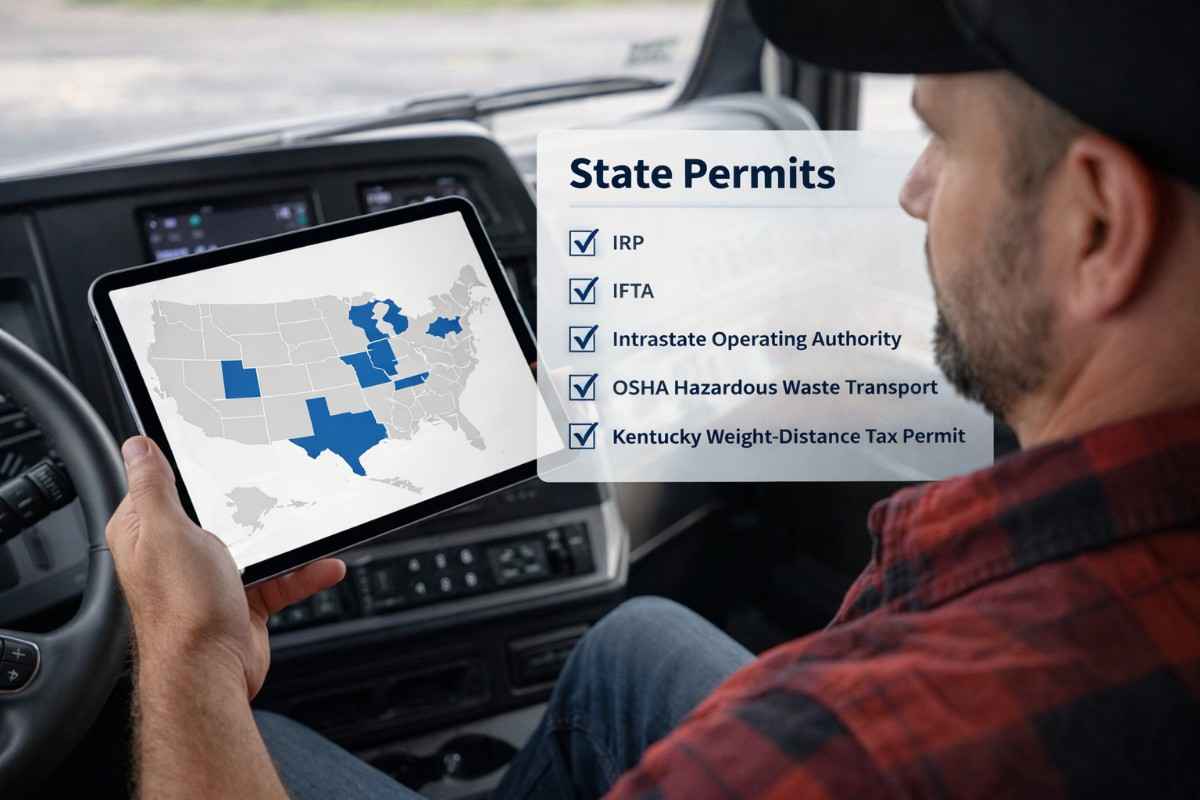
The best-planned week falls apart at a weigh station if your paperwork is not current. Before you roll out Monday, make sure your hours of service leave room for the miles you booked, your IRP and IFTA are in order, your medical card and CDL are valid, and your USDOT record is active. In 2026, brokers increasingly screen your safety and compliance record before they even offer you the load, so a clean file is not just about avoiding tickets. It is about staying eligible for the freight you are trying to plan around.
Practical Takeaways
- Know your true cost per mile and treat it as a hard floor for every load.
- Build the week around anchor loads that land you in strong outbound markets.
- Always price loads on total miles, and refuse to haul unpaid deadhead you did not budget for.
- Get detention pay terms in writing and document your times.
- Keep HOS, IFTA, IRP, medical, and authority current so a compliance gap never cancels a good week.
Planning your week is the highest-paid hour you will spend all week, but it only works if the compliance foundation underneath it is solid. If your authority, filings, or safety record need cleaning up so you stay eligible for the best-paying freight, we can help you get it right. Start your onboarding today and let our team handle the compliance side so you can focus on booking better loads. Prefer to hand off the load-finding entirely? See how our dispatch services keep your truck moving. Worried about your license? Learn more about our CDL protection program.
Need help? Call 888-700-5704 or contact us.