IRP Registration 2026: What Owner-Operators Get Wrong About Apportioned Plates
· Trucking Compliance Service
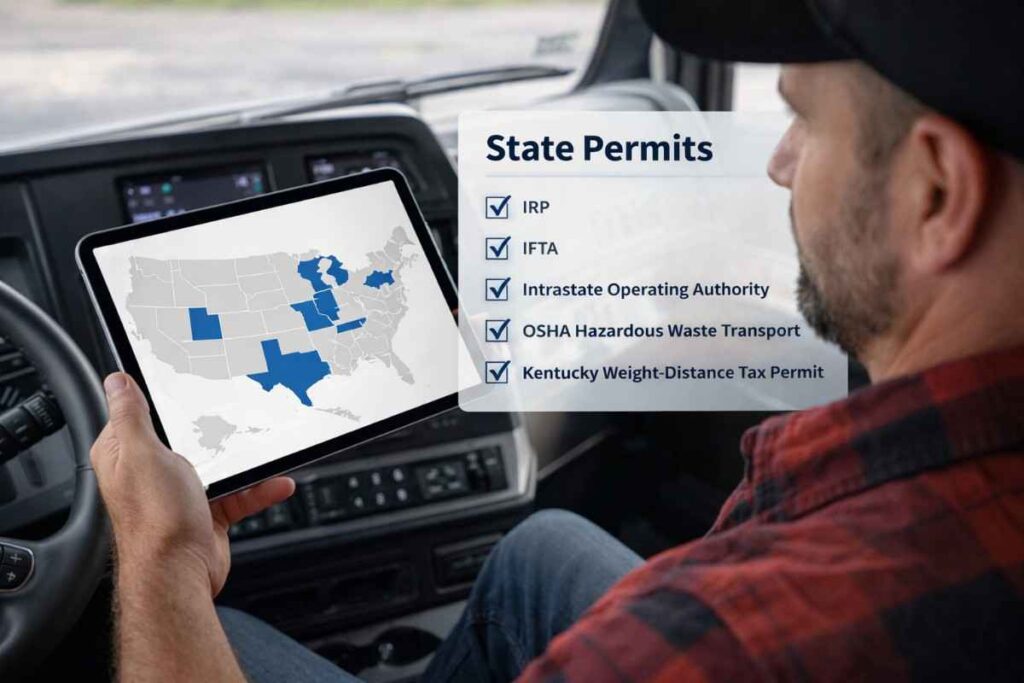
The IRP — International Registration Plan — is one of those trucking requirements that almost everyone knows exists but very few owner-operators fully understand. Most carriers set up their IRP plates when they first started, pay the renewal bill when it comes, and never think about it again. That approach works until it doesn’t — and when IRP goes wrong, it goes wrong at a weigh station with an officer writing citations and potentially parking your truck.
In 2026, with more states tightening commercial vehicle enforcement and cross-referencing IRP data in real time at inspection stations, understanding your IRP registration is not optional. It is part of operating legally every single day.
What IRP Is and How It Works
The International Registration Plan is an agreement among the 48 contiguous US states, the District of Columbia, and the Canadian provinces. It allows commercial vehicles to operate across jurisdictions using a single apportioned license plate, with registration fees distributed among the states based on the percentage of miles driven in each state during the previous year.
When you register under IRP, you report the miles you drove in each jurisdiction during the prior year. Your total registration fee is calculated and divided among those jurisdictions proportionally. The result is one plate — called an apportioned plate or a cab card — that legally allows you to operate in all participating jurisdictions without purchasing individual trip permits for each state.
Who Is Required to Register Under IRP
IRP registration is required if your commercial vehicle meets either of these criteria:
- The vehicle has two or more axles and a gross vehicle weight or registered gross vehicle weight exceeding 26,000 pounds
- The vehicle has three or more axles regardless of weight
If you operate exclusively within one state and never cross state lines for commercial purposes, you may not need IRP registration. But the moment you haul freight across a state line in a vehicle that meets these criteria, IRP registration is mandatory.
The IRP Cab Card: Why It Must Be in Your Cab at All Times
Your IRP cab card is the document that proves your apportioned registration is current and lists the specific jurisdictions you are authorized to operate in. Every IRP-registered vehicle must carry the current cab card in the cab at all times. During a roadside inspection, the officer will verify:
- That the cab card is current and not expired
- That the vehicle identification information on the cab card matches the actual vehicle
- That the jurisdictions listed on the cab card include the state you are currently operating in
- That the registered gross vehicle weight on the cab card is at or above the actual loaded weight of your vehicle
A mismatch on any of these points results in a violation. An expired cab card is an immediate citation. Operating in a jurisdiction not listed on your cab card — which can happen when you add new states to your routes without updating your IRP registration — results in the same fine as operating with no registration at all in that state.
Common IRP Mistakes That Lead to Violations
The IRP violations we see most frequently among small carriers and owner-operators are predictable and preventable:
- Not adding new states when routes change: If you start running into a state that was not on your prior year’s mileage report, it will not appear on your cab card unless you file an amended registration. Operating in that state without it listed is a violation.
- Underreporting mileage at renewal: Your IRP fees are based on miles reported. Underreporting to reduce fees is considered fraud and results in audit assessments plus penalties that far exceed what the correct registration would have cost.
- Missing the renewal deadline: IRP registrations expire annually. Operating after expiration, even by a single day, is a violation in every state you enter.
- Not updating after purchasing a new vehicle: Adding a vehicle to your fleet requires an amended IRP registration. Operating a new vehicle on the old plate or without registration is a serious violation.
Let Us Handle Your IRP Registration
Our compliance team manages IRP registrations for owner-operators and small fleets. We calculate your mileage apportionment correctly, file your registration with your base jurisdiction, track your renewal deadline, and update your registration when your routes or fleet change. You get the cab card you need to operate legally and the confidence that your registration is accurate.
Get your IRP handled by professionals: 916-866-2838
Visit truckingcomplianceservice.com — one less thing to worry about every time you pull into a weigh station.
Frequently Asked Questions
1. What happens if my IRP registration expires while I am on the road?
If your IRP registration expires and you are stopped during an inspection, the officer can issue citations for operating an unregistered commercial vehicle. In some states, the officer has authority to place the vehicle out of service until valid registration is obtained. You may also be required to purchase temporary trip permits for each state you need to pass through to return to your base state.
2. What is the difference between IRP and IFTA?
IRP covers your vehicle registration — it is the system that issues your apportioned plate and cab card and distributes registration fees among states based on mileage. IFTA covers fuel taxes — it is the system that tracks the fuel you buy and the miles you drive in each state and calculates the fuel tax you owe each jurisdiction quarterly. Both programs are required for interstate carriers, and both use reported mileage as their basis, but they are separate programs with separate filings and separate compliance requirements.
3. Can I get IRP plates if I am a new carrier with no prior mileage history?
Yes. New carriers who have no prior mileage history file what is called an estimated mileage report. Most base jurisdictions use a standard estimated mileage figure for new registrants, typically based on the average miles driven in that state by similar vehicles. After your first full year of operation, you will file actual mileage at renewal and your registration fees will be recalculated based on where you actually drove.
Need help? Call 888-700-5704 or contact us.