Hours of Service in 2026: The HOS Rules Owner-Operators Break Most (and How to Stay Legal)
· Trucking Compliance Service
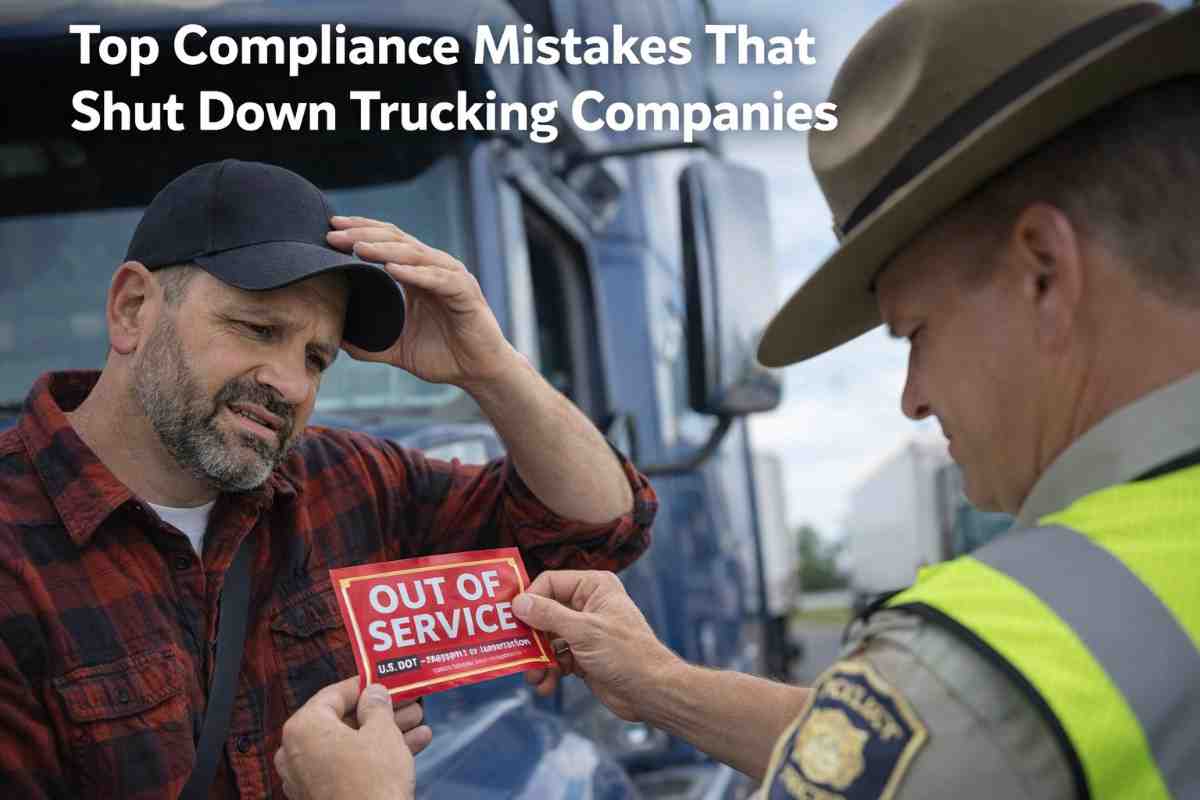
Hours of Service (HOS) rules are the part of trucking compliance that follows you into the cab every single day. Get the math wrong on your 11-hour clock or skip a 30-minute break, and one roadside inspection can end with your truck parked on the shoulder. In fact, HOS violations triggered nearly 39% of all driver-related out-of-service orders in 2025, making them the single biggest reason drivers get shut down at the scale. Here is a plain-English refresher on the HOS rules owner-operators break most in 2026, and how to stay legal.
The Four HOS Limits You Have to Know Cold
For property-carrying drivers, the FMCSA hours-of-service rules have not changed from the 2020 final rule. Four core limits govern how long you can legally drive and work:
- 11-hour driving limit: You may drive a maximum of 11 hours after 10 consecutive hours off duty.
- 14-hour window: You cannot drive beyond the 14th consecutive hour after coming on duty. Loading, fueling, and paperwork all burn this clock, and it does not stop for breaks.
- 30-minute break: After 8 cumulative hours of driving, you must take at least a 30-minute break. It can be off-duty, sleeper-berth, or on-duty (not driving) time.
- 60/70-hour limit: You cannot drive after 60 hours on duty in 7 days, or 70 hours in 8 days. An optional 34-hour restart resets that weekly clock to zero.
The Violations That Get Drivers Parked
Inspectors see the same mistakes over and over. The most commonly cited HOS violations are the skipped or late 30-minute break, driving past the 14-hour window because on-duty time ate up the day, and blowing through the 60/70-hour weekly cap during a busy stretch. Any of these can cost you at inspection.
The stakes are steep. Driving more than 3 hours past a driving limit can trigger an immediate out-of-service order, which means the truck stays put until you have logged 10 consecutive hours off. FMCSA civil penalties for serious HOS violations can exceed $19,000 per violation for the carrier, and drivers can be fined thousands more. A single out-of-service order also lands on your CSA record and follows you into insurance renewals.

Your ELD Has to Be on FMCSA’s List
Accurate logs only count if your device is compliant. FMCSA has tightened enforcement on electronic logging devices, and drivers running a non-compliant or de-registered ELD can now be placed out of service at the roadside. Before your next trip, confirm your ELD is still on FMCSA’s official registered list and that your firmware and back-ups are current. If your provider gets removed from the registered list, you are the one who pays the price at the scale.
Know the Exceptions That Actually Help You
A couple of built-in exceptions can legally extend your day when you use them correctly. The short-haul exception frees you from keeping a full log if you stay within a 150 air-mile radius and return to your work-reporting location within 14 hours. The adverse driving conditions exception lets you add up to 2 hours of driving time when unexpected weather or traffic you could not have known about slows you down. The sleeper-berth provision also lets you split your required 10 hours off into a 7/3 or 8/2 pairing without penalty. Learn these cold so you use them instead of running illegal.
Practical Takeaways for Owner-Operators
- Plan your day around the 14-hour window, not just the 11 driving hours, because loading and detention eat the clock.
- Take your 30-minute break before the 8-hour mark, not after, so a delay at a shipper does not push you over.
- Track your 60/70-hour total mid-week so a good-paying Friday load does not put you over the line.
- Verify your ELD is on FMCSA’s registered list and keep paper log back-ups for malfunctions.
- Never edit or falsify a log. Falsified records are treated far more harshly than an honest HOS mistake.
Keep Your Clock and Your Compliance Clean
HOS compliance is not just about avoiding a ticket. Clean logs protect your CSA score, your insurance rate, and your ability to keep hauling the freight that pays. If juggling logs, ELD checks, and the rest of your DOT paperwork is pulling you away from driving, let a compliance team handle the back office so you can focus on the road. Start your onboarding today and get your compliance dialed in before your next inspection. Drivers worried about tickets and violations on their record can also explore our CDL protection options.
Need help? Call 888-700-5704 or contact us.